Archive
Japan – Osaka and Fukuoka
Japan so far:
After the forested temples of Nara Park, a short train ride brought us back into modernity with a bang and deposited us right into the middle of the buzzing burg of Osaka. Later, we moved on to Fukuoka to catch the yearly sumo tournament.
NOTE If you are reading this in a news reader such as Google Reader, or inside Facebook on a tablet, you might want to open this in a dedicated browser window as the photo layout may work better. And there are more photos from these locations available on Flickr.
OSAKA
Osaka is a paradox – a city with seemingly little to see from a typical tourist’s viewpoint, but a city that remains nonetheless very compelling. Aside from Osaka Castle and a couple of other attractions, the main pull for Osaka has a rather more hedonistic bent. This is, after all, the city which boasts a special word for “eat until you drop” and the same might be said of the attitude towards drink. More working-class and street-food-oriented than its big brother Tokyo, less stuffy than its neighbour Kyoto, Osaka is proudly brash and boldly neon.
To get it out of the way: yes, we did visit Osaka Castle. Sadly, we did so having suffered the after effects of our first night out in Osaka, so we might not have been best placed to appreciate a seven story climb through a museum stuffed to the rafters with Japanese pensioners and with little in the way of English commentary. We did however appreciate the walk, and the obligatory green-tea ice cream cone in the park outside.


But, dear reader, the main event in Osaka is the nightlife. This is truly a city that looks better when the sun goes down and the neon signs ignite. Ridley Scott famously quoted night-time Osaka as his inspiration when designing Blade Runner, and he returned here to make the Michael Douglas-starring yakuza drama “Black Rain”. In any case, we enjoyed galavanting up and down the Dotonbori canal and main street, and even ventured far enough abroad to Shinsekai, the dodgier end of town, to go up a pointless viewing platform in a faux-Eiffel Tower and eat many varieties of fried foods. A good time was had by all.


Of course, we occasionally saw the dark side of hedonism (or perhaps Japan’s ever-fluctuating economy) and Osaka had its fair share of down-and-outs, including this poor chap:
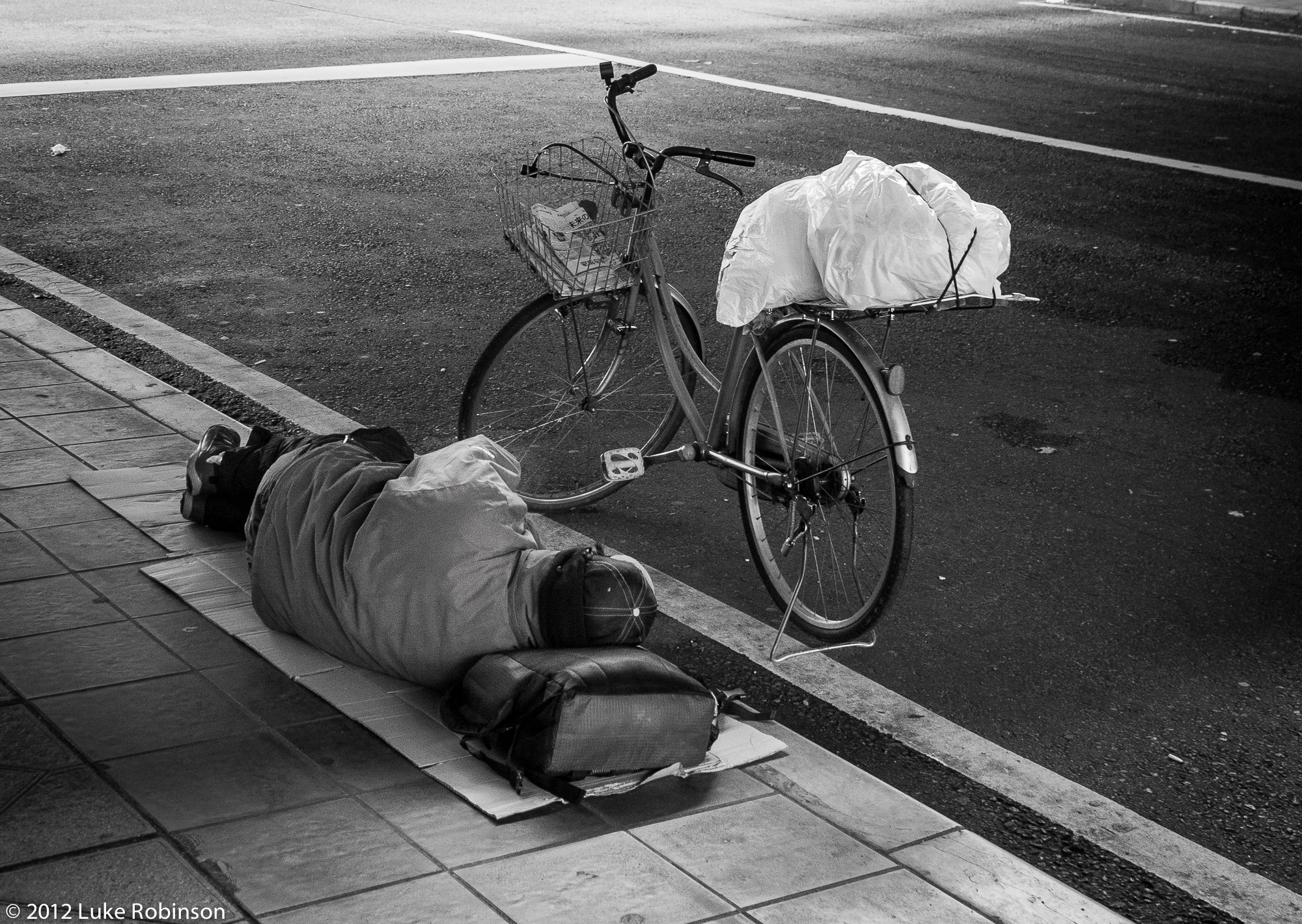
Homeless Man under Overpass, Osaka
FUKUOKA
After a couple of nights’ liver damage, and a daily rate of one okonomiyaki per person (which is frankly unsustainable) we moved on to Fukuoka, a medium sized city at the north end of the southern island of Kyushu. Fukuoka is another place one could reasonably say held little in the tourist-magnet department in terms of sightseeing, but for those of a foodie persuasion, Fukuoka is a bit of a mecca. Not only is it the home of the lovely and very-bad-for-you Hakata-style tonkotsu ramen, but there are also heaps of street food vendors in stalls called yatai lining the many waterways running through the centre of the town.

Yatai food stalls along the river, Fukuoka
The main reason we had for coming to Fukuoka, aside from the lovely food, was to visit the 2012 Fukuoka Grand Sumo competition on its penultimate day. I had been to this same competition in 2007 but timing then meant that I could only stay for the midday session, when the lower-ranking rikishi (fighters) had their bouts in front of an empty hall. This time, we had ensured that we arrived in Osaka with enough time to enjoy the full afternoon of competition, being able to see the higher echelons of competitors in the juryou and maku-uchi divisions (the latter including the highest class of Yokozuna). This time, as the afternoon wore on, the crowd filled in and the hall was soon filled with raucous cheering, no doubt enhanced by copious amounts of beer and sake being consumed in the seats and boxes all round. This was definitely a higher class of sport than what I had previously witnessed.


Next time we’re going to venture south into Kyushu, into rolling grasslands, volcanic lakes, burbling hot springs, and samurai castles…. see you then!
My 2012: Photographic Year-End Review
It’s been a good year, again. A lot of travel (43 cities, 12 countries, 100K+ kilometers), a lot of laughs, a lot of good food. A promotion and the largest deal we’ve ever done closed at work. And, most importantly, a kind young lady agreed to marry me. I end 2012 feeling very fortunate.
NOTE If you are reading this in a news reader such as Google Reader, or inside Facebook on a tablet, you might want to open this in a dedicated browser window as the photo layout may work better.
JANUARY
In January I returned to Scotland in winter, this time to the Isle of Skye, accompanied by my good friend (and accomplished photographer) Corin Dimoupolous and guided by local expert landscape photographer David Langan. We spent a long weekend exploring the island, and, weather permitting, shooting a few landscapes.


FEBRUARY
The coldest month saw us on a mini-break to an even colder place: Berlin. Despite icy temperatures we had a great time exploring both the historic and modern aspects of this vibrant city. We ate well and drank better.


MARCH, APRIL, MAY
These months were fairly quiet, at least in terms of photography for me, as they consisted mostly of a series of work trips which didn’t allow much time for quality snapping. Must do better.
However, I did manage a few shots around London in the downtime.


JUNE
June saw another personal trip to France for a wedding in the Dordogne – but first stop was a few days in Paris. (More Paris shots can be found in the original blog post.)


After Paris we moved to the Dordogne and Limousin region for our friends’ wedding. This was a lovely few days in rural southern France, touring the medieval fortress towns along the river, and eating as much duck, pate, and Limousin beef as we could manage. Again, for more photos go and check out the original blog post.


JULY AND AUGUST
In the late summer, London was host to the 2012 Olympics and we were lucky enough to visit the Olympic Park as well as going to see the Men’s Hockey and the Men’s Basketball Final. It was a magical time in London, and I will always remember what it was like to be here in the thick of it.


In late August I went back to Paris for the first of a series of work trips there, and I managed to catch a perfect summer’s day along the banks of the Seine.


SEPTEMBER
We began September with a lovely late-summer break to the Cyclades: a two-part trip to Mykonos, famed for its maze-like streets and raucous nightlife, and Santorini, land of a million postcard views. More photos can be found in the original blog post.


The morning after I returned from Santorini, I boarded another flight to Bangkok for work. Fortunately I allowed myself an extra day there to get reacquainted with this city, and to sample some of the myriad food delights on offer in its street stalls and markets…


OCTOBER
Early October saw me on yet another work trip, this time to Ankara and Istanbul in Turkey, where I was fortunate enough to have a few free hours to myself here and there to wander the old town and the nightlife district of Beyoglu. It’s always good to return to Istanbul.


NOVEMBER and DECEMBER
November and December were all about our trip to Japan and Hong Kong. Though I am only about a third of the way through processing the photos from that trip, what I have gone through thus far is encouraging and more photo reports from this trip will be gracing this blog over the course of January. Of course, this is the trip that hosted the aforementioned proposal, so it has a special place in my heart.
First up: Tokyo


And, of course, the rural beauty of Hakone and Nara:


That’s about all for 2012, photo-wise at least. I am happy that we’ve had a fulfilling year. Here’s to 2013 being bigger and better!
Happy New Year
Luke Robinson
Japan – Hakone and Nara (a photo report)
For the second instalment in our Japan trip, we find ourselves travelling through the very distinct landscapes of Hakone – a volcanic spa area near Mount Fuji – and Nara, a verdant and picturesque former imperial capital filled to the brim with centuries-old landscaped gardens, temples, and shrines.
NOTE If you are reading this in a news reader such as Google Reader, or inside Facebook on a tablet, you might want to open this in a dedicated browser window as the photo layout may work better. Also, there are more photos from these locations available in the corresponding set over on Flickr.
HAKONE
After our first few days in Tokyo, we were city’d out and ready for a change of scene. A quick Shinkansen bullet train and then a series of switchback local trains found us in Hakone, an area of volcanic scenery, hot springs, geysers and lakes surrounding Mount Fuji. It is also an extremely popular destination for Japanese tourists as it is so close to Tokyo. So, at times, one feels like one is at an amusement park, in an endless series of queues to board various funiculars and cable cars. But the moment your cable car comes over the first ridge and you see Mount Fuji dominating the horizon, it’s all worth it.

Mount Fuji from the Hakone Ropeway

Mount Fuji from Owakaduni, Hakone
One of the obligatory and fun bits of the day tour of Hakone is Owakaduni, halfway along the ropeway, which is a national park area on the side of a mountain which is perforated with steam geysers venting sulphurous gases from the volcanic water table below. It is the done thing amongst the Japanese day trippers to visit this area, take a photo of the geysers, and then queue to buy an egg which has been boiled black in the sulphurous waters. We skipped the egg.


Hakone, as it turns out, was not the photographic treasure trove it might have been for me. This is not because of any fault of the subject matter, but of the preoccupation of the photographer with a more important capture. Back in 2007 I was very impressed with the beauty of the view from the Hakone Detached Palace Park on the shores of Lake Ashinoko, and took this panoramic:

We have the picture above enlarged and hanging on our wall at home, and take great pleasure in contemplating it. So, it seemed like a nice place to propose marriage. Much rejoicing followed, though we never found this exact spot again, given the context, the view was just as impressive.


NARA
In a bit of a happy post-engagement haze, we moved on to Nara in the Kansai region. Nara was Japan’s first permanent capital, established in 710, and attracted powerful families, becoming a political and religious power centre. The legacy this left is a small, attractive city of low buildings, but the main attraction of Nara is certainly the large Nara Koen (park) and the various temples, lakes, gardens, tame deer, and bountiful autumn colours to be found therein.
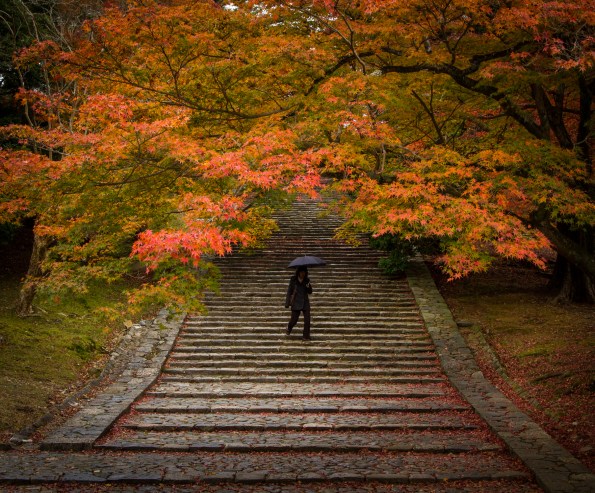
The woman on the stairs, Nara Park


Within Nara Park there are some stunning gardens, chief amongst them the Yoshikien and Isuien Gardens, adjacent to one another and both examples of immaculate landscaping in harmony with the surrounding countryside. Of course, in common with most Japanese gardens, these were liberally sprinkled with Japanese maple and gingko trees, and as we were bang in the middle of the autumn colour peak, there was a brilliant show of leaves, both on the trees and on the ground.
Yoshikien Garden

Stone Steps, Autumn Colours and Leaf Fall, Yoshikien Garden, Nar


Isuien Garden
Isuien Garden was build as a “mirrored landscape” mimicking the hills surrounding it, and meant to draw your eye towards the main gate of the Todaiji Temple in the background.

Pond and Todaji Temple Gate, Isuien Garden, Nara Park

Flowing waterfall, Isuien Garden, Nara Park


Todaiji Temple
The main temple in Nara Park is Todaiji, the largest wooden structure in the world. The main Buddha hall or daibutsu houses a 15m bronze Buddha image as well as guardian demon statues.


Nigatsudo Hall
The Todaiji Temple has a sub-temple up on a hill – the Nigatsudo Hall – which is (yet again) situated within some amazing autumn foliage.


Kasuga Taisha Shrine
Finally, nestled in the southeast corder of Nara Park is the Kasuga Taisha Shrine, the most important Shinto religious site in Nara. Kasuga Taisha is known as the Lantern Shrine, with hundreds of stone lanterns littered throughout the forests surrounding it, and hundreds of worshipper-donated bronze lanterns hung throughout the main complex. There are also regular donations of rice, cabbage, and sake to keep the kami spirits appeased.


That’s it from Hakone and Nara. The next episode will take us back into the cities of Osaka and Fukuoka, where we will see neon nightscapes, samurai castles, and sumo. See you then.
Japan – Tokyo (a photo report)
In this inaugural post covering our recent three-week trip to Japan and Hong Kong, I will cover the vibrant, pulsating, and overwhelming city of Tokyo. We began and ended the Japan leg of our trip here, spending about four full days here, and could easily have done a week if given the opportunity.
Tokyo is a city of contrasts, and although it is not outwardly a beautiful city, it is one that rewards the intrepid urban explorer with scenes of utter urbanity right next to jaw-droppingly beautiful parks concealing peaceful shrines and temples.
NOTE If you are reading this in a news reader such as Google Reader, or inside Facebook on a tablet, you might want to open this in a dedicated browser window as the layout will work better.
When we first landed in Tokyo, it was an assault on the senses, but a very welcome one. Staying in Shinjuku that time meant that we were right in the heart of the restaurant and bar scene, and we wasted no time getting stuck into an izakaya (pub with food), visiting my favourite (tiny) bar “Albatross” in the Shomben Yokocho (“piss alley”) and ending up at a late-night ramen joint where we had to order through a vending machine.


The days we spent thereafter (on both visits) were spent covering a great deal of ground in both Western and Eastern Tokyo, and below is a selection of the experiences we had. As per usual there are many more photos to be found in the equivalent set over on Flickr so I do encourage you to check them out.
Yoyogi Park and the Meiji Shrine
As per last time I visited Tokyo, the first morning of our trip happened to be a Sunday, and the best thing to do on a Sunday if you are in West Tokyo is to head down to Yoyogi Park and the Meiji Shrine. The former because there are usually odd people about (more on that later) and the latter because there is usually a Shinto wedding or some other ceremony going on. We were in luck because (as on my last trip here) the Seven-Five-Three “middle childhood” blessings were taking place at the Meiji Shrine, which meant loads of adorable Japanese kids in kimonos with their elegant parents only too happy to pose for photos.

Shinto Wedding, Meiji Jingu


Near the Meiji Shrine is the Meiji Garden, which is well worth the ¥500 (£4) entry fee as it is a lovely imperial garden set around a teahouse and a small lake, lush with vegetation and with the maples just beginning to show the very first signs of the autumn colours (momiji), and with kimono-clad women laughing amongst themselves.

Traditional Chrysanthemums outside Meiji Shrine

The very first signs of autumn colour (momiji) in Meiji Gardens

Kimono-clad women laughing together, Meiji Garden
Outside the Meiji Shrine and Garden is Yoyogi Park, a large green space providing some respite from the surrounding intense urbanity of Shinjuku, Harajuku and Shibuya. Yoyogi Park on Sundays typically means a mixture of different “tribal” groups coming out to play, such as the Tokyo Rockabilly Club (previously) and cosplay people dressed up in animal suits. But today was pretty quiet in the park, even for such a nice day, and so we were able to enjoy the gingko trees beginning to shed their leaves.

Strangers, Tokyo Rockabilly Club, Yoyogi Park
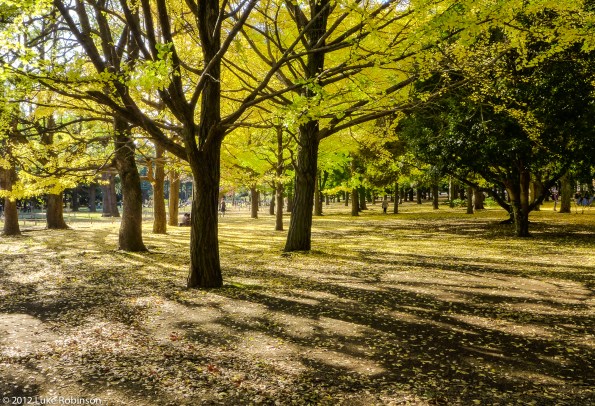
Gingko trees beginning to drop, Yoyogi Park
Ueno Park and Yanaka
One afternoon towards the end of our trip we trekked up to Ueno Park, another haven of tranquility in the midst of the Tokyo sprawl. By this time the autumn colours had well and truly arrived in Tokyo, and it made a dramatic backdrop to the small shrines dotted amongst the park’s small hills and dales.


Near Ueno is an old neighbourhood (shitamachi) called Yanaka that is one of the last surviving pockets of low-rise “Old Tokyo” that remains. It is dotted with quiet market streets and various temples and shrines. In one of them we were approached by an 81-year-old man with good English who explained that there was a monument to a poet and his famous lover, a real beauty of her time, and that he had had the honour of hosting an actual blood descendant of the poet’s lover at the temple. We were suspicious at first but he gave us a print of a painting he had done to commemorate a line in the poem about someone letting a boy’s pet sparrow fly away. A lovely and odd little encounter, very Japanese.


Tokyo Sky Tree and Asakusa
A new addition since my last visit, the Tokyo SkyTree now looms over northeast Tokyo and you can use it to orient yourself wherever you might be, being that it is 684m / 2080ft tall. There are observation decks at 350m and (if you pay an extra 50%) at 450m. We attempted it one afternoon but were put off by extremely long queues. Returning the next morning we would have been OK if not for high winds causing restrictions to the operations of the lifts. More queueing ensued, and, in a very Japanese (i.e. crowded) fashion we finally got to go up the thing after a total time investment of four hours. Was the view worth it? Juuuuuuust barely. I am not sure I would go through that again; I imagine that for Tokyoites it’s somewhat the same as New Yorkers’ attitudes to the Empire State Building. Something for the tourists.


Much more rewarding is the other de rigeur visit of northeast Tokyo, which is to Asakusa and the Senso-ji temple therein, whose massive front gate complete with giant paper lantern is a symbol of Tokyo. A long street, packed with visitors sampling temple-themed pastries and deciding whether to buy plastic swords, leads back to an open space with another large gate, a five-story pagoda, and the main hall. All around are places to determine your fortune, often by donating a ¥100 coin and gaining the privilege of shaking a stick out of a tin, then matching the script on the stick with a series of drawers, retrieving a piece of paper with your individual fortunes. Our fortunes were mixed, but Nicola’s prophetically told of success in marriage awaiting her…


Tsukiji Fish Market
Something I missed last time around is the famous fish market of Tsukiji, in southeastern Tokyo. It was imperative that we visit it this time, as evidence continues to mount that the current, rather organically-grown market will be shuttered in the next couple of years, moved to some brand-spanking-new state-of-the-art facility where the real work will go on at ground level and tourists will be confined to some overhead gallery. Which is, on balance, appropriate given that it’s a wholesale market and the tourists just get in the way in the old setup, but I would have felt robbed had we not been able to wander around the tiny lanes, dodging motorcarts and stepping around discarded tuna heads, interacting with the market sellers and watching the meticulous process of filleting a sea eel up close. Behind glass and/or upstairs from the action will be a very different kettle of fish indeed.
In any case we were spared the ignominy of rising at 3AM to contest for a place watching the famous tuna auction, as it was now December and the auction was closed to the public for the busy holiday season. So we arrived jauntily at 9AM to see the wholesale market, and found to our delight that there was plenty of frozen tuna still to be seen, it’s just that in this case there was nobody yelling about it. We were OK with this.


That’s about it from the Tokyo side. We went to many more places in Tokyo than this, of course, and there were a host of nightlife and eating establishments that we may well document in due course. But Tokyo is too vast to ever fully capture, and that is surely a good thing.

Western Tokyo and Mount Fuji from the Tokyo Metropolitan Governm
Next up: the Fuji region of Hakone, and the tranquil park and temples of Nara.
A night and a day in Istanbul
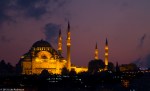
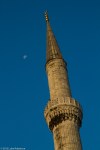
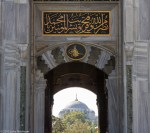
Another week, another work trip, this time to Turkey to visit a partner. Luckily I was able to cap my trip off with a free night and a free morning to revisit this beautiful city. From the tourist hotspots of Sultanahmet, through the fish sandwich vendors of Galata, and the bazaar district up through to the Suleymaniye Mosque, Istanbul once again proved itself to be a most photogenic city and I look forward to my next visit there.
These photos may also be found over on Flickr in case you’d like to comment or share them individually.


-

- Phoning Home, Yeni Camii

-

- Sandwich Vendor, Galata
-

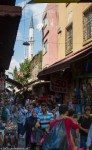
- Desolate Alleyway, Galata


-
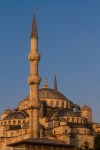
- Blue Mosque at Sunrise


-
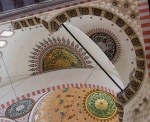
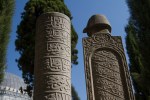
- Suleymaniye Camii Ceiling Detail
-

- Fish Sandwich Boats, Golden Horn

-
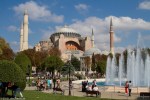
- Hagia Sofia and Fountains
Photography from Bangkok, September 2012
A couple weeks back I got back from our holiday to the Greek islands and immediately had to turn around and fly to Bangkok for a business trip. Once business was out of the way I was able to spend a little bit of time visiting Bangkok, camera in hand, splitting my time between Jim Thompson’s House, Chatuchak Market, and the classic must-see temple complexes of the Wat Phra Kaew, Wat Pho and Wat Arun. It was a short visit – my first since 2001 – but a highly fulfilling one.
For a change I am trying out WordPress’ built-in gallery view for my photos – click on any one to start a slide show – but if you’d like to see them in a still larger format go ahead over to my Flickr set for the usual goodness. Also this is best viewed in a proper browser window – so inside an iPad Facebook window, or inside Google Reader may give you some formatting issues.


Photos from late summer trip to Mykonos and Santorini
Once in a while you’ve got to remember to have a good old fashioned summer holiday, free from agenda, without every step being checked against a multitude of websites beforehand, with no plans beyond getting a tan, having a bit of a wander, and eating some good food.
This was one of those holidays. The Cyclades are a classic Mediterranean holiday destination, whose only mission in life is to host, for six months of the year, hordes of tourists, be they day-trippers from the cruise ships, two-week honeymooners, backpackers, or, in our case, casual island-hoppers.
Mykonos
Our first stop was Mykonos, with its classic maze-like old town, the bars of Little Venice, the inevitable decorative windmills, the beaches, the gays, the party crowd, and the omnipresent meltemi wind, always lashing the northern coast and making every beach visit an exercise in finding the optimal way to make sure your beach towel doesn’t turn into a sail. We largely avoided the “party” beaches and the ones where the sun loungers were almost on top of one another, and found some nicely sparse ones to the southeast called Elia and Lia. But we won’t be showing you the beaches here, because, well, that’s boring. What you’ll see below is a selection of shots mostly from Mykonos Town itself.

Sunset at Little Venice, Mykonos

Harbour fishing, Mykonos Town

Nap time, Mykonos Town

Kitchen of Niko’s Taverna, Mykonos

Railing and blue sky, Mykonos Town
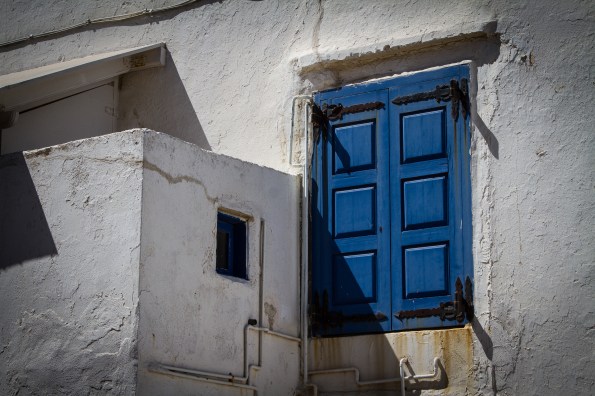
Blue door, Mykonos Town
We enjoyed Mykonos and would go back, but the jewel in the crown was yet to come…
Santorini
Santorini is the glorious island that launched a million postcards, the result of a massive volcanic explosion that blew the top off the mountain island and left just the rims of the caldera poking above the Aegean. Since then, on the main island that remained, Thira, the steep rims of the caldera have been colonised by dramatic cliffside villages, blocky white “cave houses”, blue-domed churches and luxury villas stacked on top of one another, tumbling down the hills. It is immediately dramatic and beguiling, and we were lucky enough to have snagged a lovely little villa in the village of Firostefani, just north of the main town (also called Thira). We made a number of excursions to other destinations (the beaches at Perivolos and Vlychada as well as the towns of Pyrgos and Megalochori and the fishermen of Ammoudi Bay) and had some truly excellent food at places like To Psaraki in Vlychada and Aktaion and Mama Thira in Firostefani. It was a grand way to end the week.
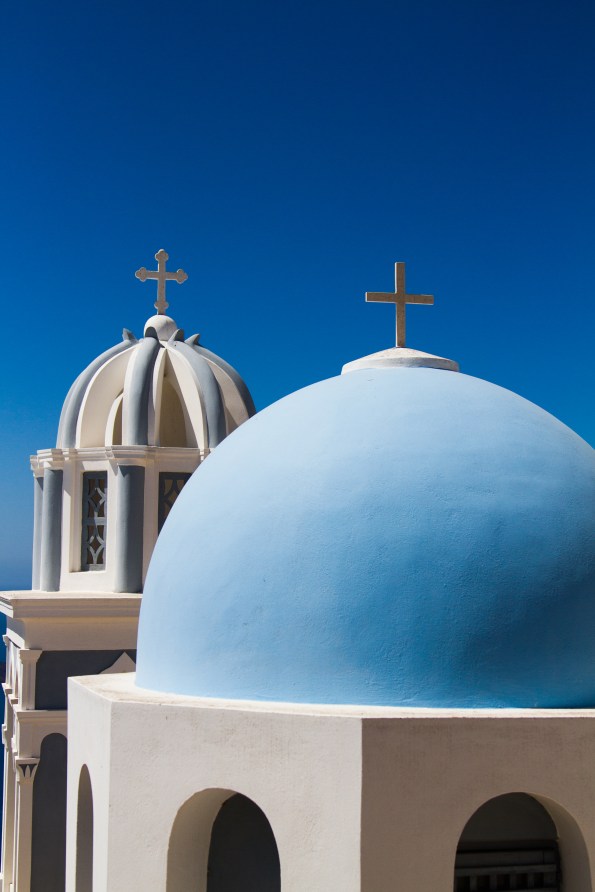
Typical Blue Church Dome, Imerovigli, Santorini

Bougainvilla, Firostefani, Santorini

Santorini Caldera Coastline
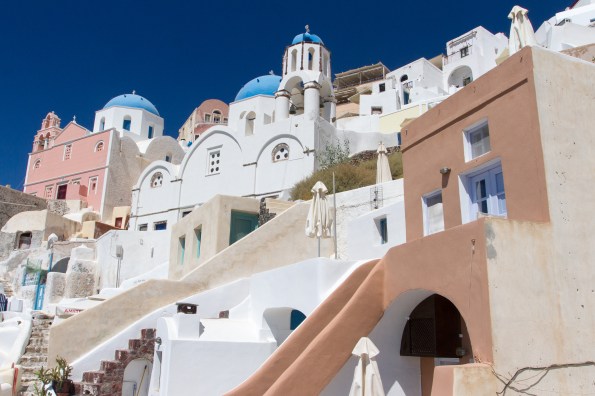
Oia, Santorini
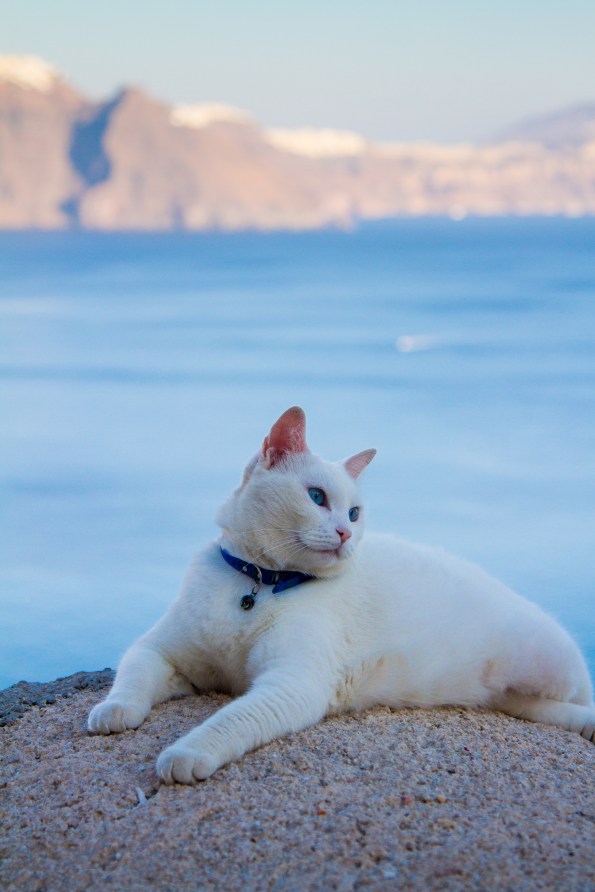
Lazy Cat, Oia, Santorini

Sandstone Cliffs, Vlychada, Santorini

Inter-generational fishing, Ammoudi Bay, Oia, Santorini

Classic Blue Church Dome, Oia, Santorini
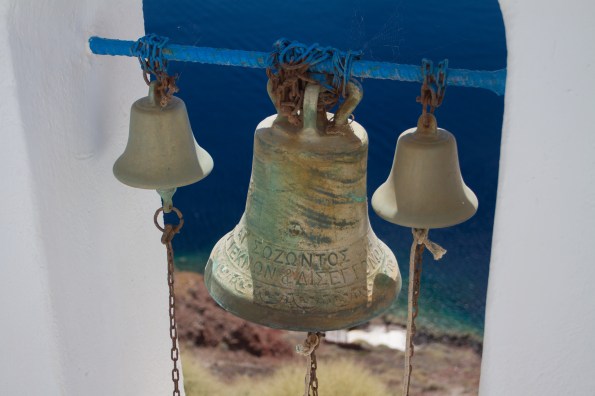
Church Bells, Oia, Santorini
Of course the first thing every tourist guide and dog-eared Lonely Planet will tell you is that you shouldn’t miss the sunset from Oia. So we, along with every other tourist in Santorini, duly trekked north to participate in this mass ritual of sun worship. And I mean every other tourist. Despite the crowds we snagged one or two nice shots…
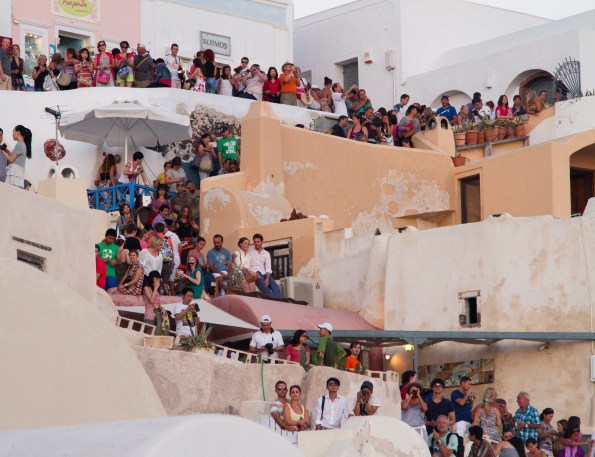
Sunset Crowds, Oia, Santorini

Panorama of Oia at Sunset, Santorini

Oia at Sunset, Santorini
That was to be all for our Clycladic adventure, however I knew that when I got back to London I would have to turn right back around the next day and leave for Bangkok on a work trip. More to come on that matter…
Of course, as ever, there are more photos from this trip to be found over on Flickr.
Until next time!
Paris, August 2012 – Photos of River Life
Due to a corporate reorganisation at the day job, I am now reporting into our Paris office, and this will involve regular trips to the City of Light. Poor me.
Of course, despite having been to Paris many, many times, it would be remiss of me not to take a camera along, at least on the overnighters, and so in that spirit I present some frames from my most recent outing, which happened to coincide with a beautiful summer’s eve. The Olympics were being shown live on a big screen in front of the Hotel de Ville, but I found my entertainment doing a lazy loop around the Ile St Louis and the Ile de La Cité, and perusing the pleasures of the Paris Plage, which seemed full of good-time Brazilians partying as the sun set over the Seine. In the evening I went out again into St Germain, always a rich photographic hunting-ground, and I remembered to bring my tripod…
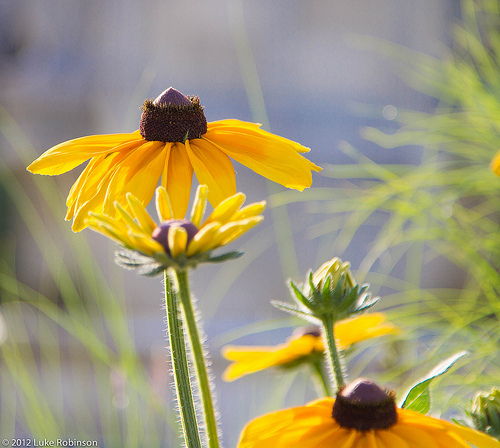


You guessed it, there are more photos in the relevant photoset over on Flickr!
New Gigapan Panorama of Paris
I have uploaded my first panorama to Gigapan.org. This is relatively small, 68mp compared to 1gp that some of their panoramas can boast, but it’s still a great way to view a large panorama in an interactive way. Be sure to hit the full-screen button for the best experience.
My Paris Gigapan can be viewed here.
Visiting the Dordogne and Limousin, June 2012 – Photo Report
As part of the same trip that started with a few days in beautiful Paris, we travelled south to the Dordogne / Limousin area for a few more days of exploration, relaxation, and degustation before joining up with some friends in the region for a three-day wedding extravaganza.
Our route took us from Limoges down to the Dordogne river itself, which is festooned with medieval villages and chateaux hewn out of hillsides and perched atop cliffs. Many of the villages and chateaux were variously at odds with each other during the Hundred Years War, with the French hunkered down in one redoubt while just a kilometer away, on the other side of the river, Richard the Lionheart might have been planning his next conquest. We were able to variously visit or canoe past many of these during our first couple of days.
Click on any of the photos below to view larger versions on Flickr – and click them again once you’re there if you want to see full screen!
Castelnaud-la-Chappelle

Beynac-et-Cazenac
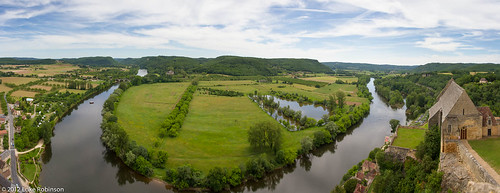
Panorama of the Dordogne from Chateau Beynac-et-Cazenac

Roses of Beynac-et-Cazenac

Interior staircase of Chateau Beynac-et-Cazenac
Over the course of our visit we moved North, away from the Dordogne river, and visited many quaint (and quiet) villages en route, including Bourdeilles and the very picturesque Brantôme, “the Venice of the Dordogne”.

Roses of Bourdeilles

Brantôme Panorama

Canalside door, Brantôme

Hungry Ducks of Brantôme

No Parking, Brantôme
More images can be found in my Flickr set “The Dordogne and Limousin – June 2012“.


 Mortal Coil